Last calibration run for proton-proton collisions at LHC
After some delays, the LHC ran its final “Van der Meer (VdM) program” fill with colliding protons over the weekend. In short, this is a special type of “fill” where the LHC collides fewer protons than usual to allow experiments to measure some crucial aspects of the beam. The experiments than perform tests by having the LHC beams moved in the transverse plane in patterns called “VdM scans”. Indeed, the idea is basically to scan the profiles of the beams in a few different ways. Since this is the last year of LHC Run 3, and indeed the last year of LHC operations at all before the accelerator shuts down for upgrades and gets a new name… This will be the last calibration program with protons at the LHC!
The resulting data is used to estimate the “luminosity” or total collisions recorded in a given year at the LHC, which is necessary information for most physics measurements. So the success of the program is critical if we want to make the most of all proton-proton data collected this year, and in particular for a few special precision measurements that are planned to be performed on exceptionally clean “low pileup” data recorded earlier this year.
The reality of the VdM program can be an unpredictable rollercoaster. Unexpected issues with the LHC can cause a “beam dump” where protons are discarded. Refilling the LHC then takes hours. The full program of scans used by the CMS detector alone takes at least 12 hours, broken into two sections. It sounds simple enough, but the start times are subject to arbitrary delays from the LHC and depend on the scan programs of the other experiments. So you’ll be working 12 hours over the weekend… but it’s hard to say which 12! Anything is on the table for this critical data, and due to the technical constraints the LHC is not always able to accommodate requests like “please don’t do it over the weekend this time”.
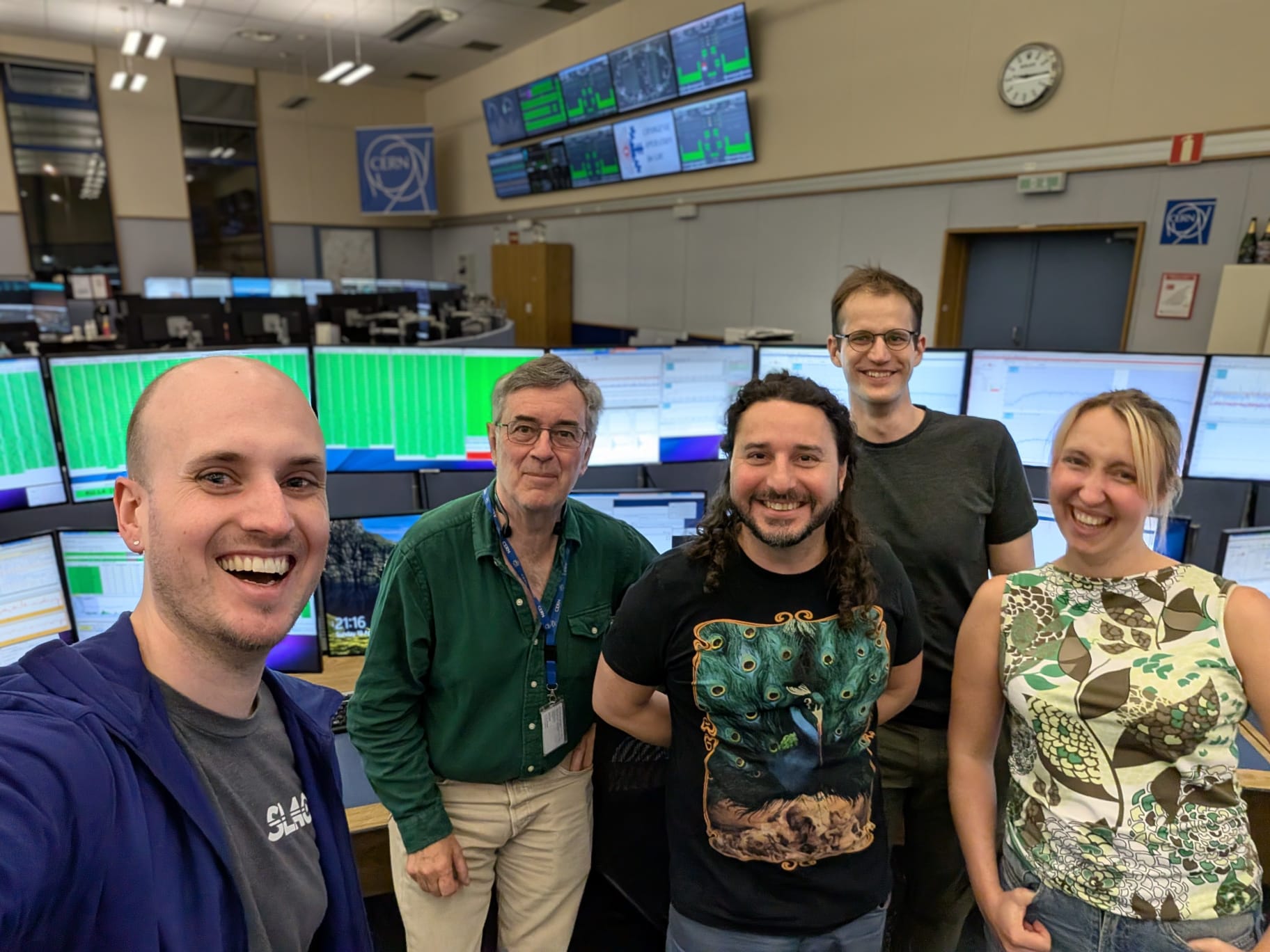
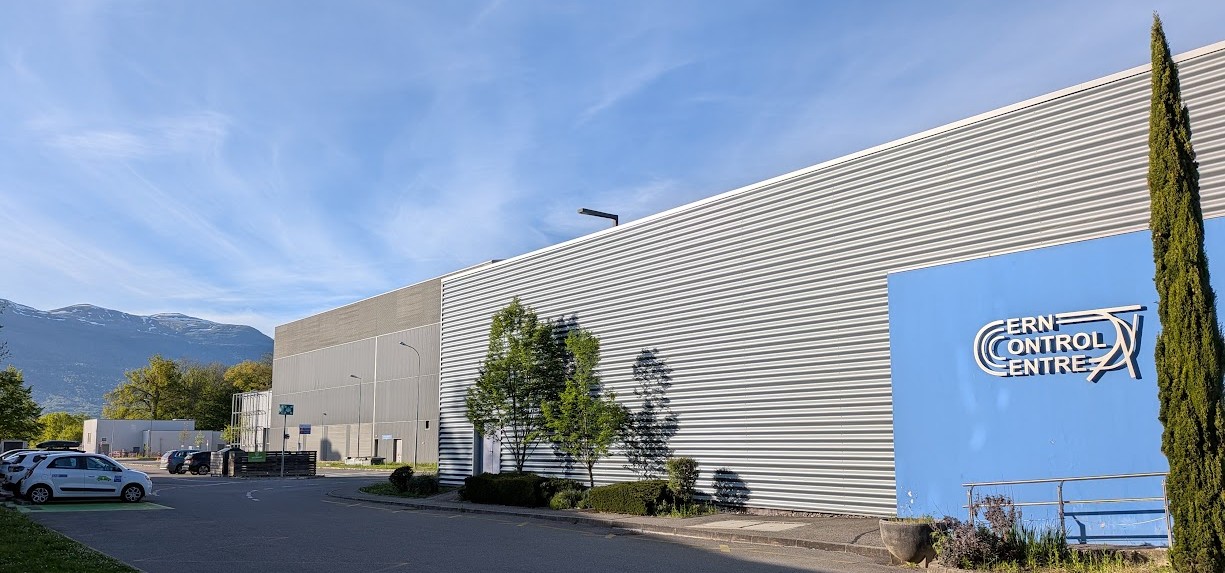
Nonetheless, if you are up for it, being present in the CERN control center during the scans can be a fun experience. I was lucky to join this year, and ended up spending a wild weekend in the control center with the people in the photo above (and some other lovely people as well). The experiments need to have luminosity detector experts present throughout the scans to make sure that the detectors are functioning well. If a luminosity detector doesn’t record good data during the scan, this could greatly hurt the precision of final calibration! So it was a great opportunity for me to travel to CERN and pitch in. We saw some very interesting things and learned a lot about the LHC beam origins–maybe I’ll be able to elaborate on that sometime!